Robotics engineer · Researcher · Educator

Intelligent motion.
Grounded in hardware.

I'm Nnamdi Chinomso Chikere. I develop bioinspired robots and control systems, with research interests in adaptive behaviors and embodied intelligence. My engineering experience connects dynamic models, sensing, hardware, and experimental validation.

Ph.D. candidate in Electrical Engineering
University of Notre Dame · MINIRO Lab
Expected January 2027

Seeking full-time industry, postdoctoral, and faculty opportunities.

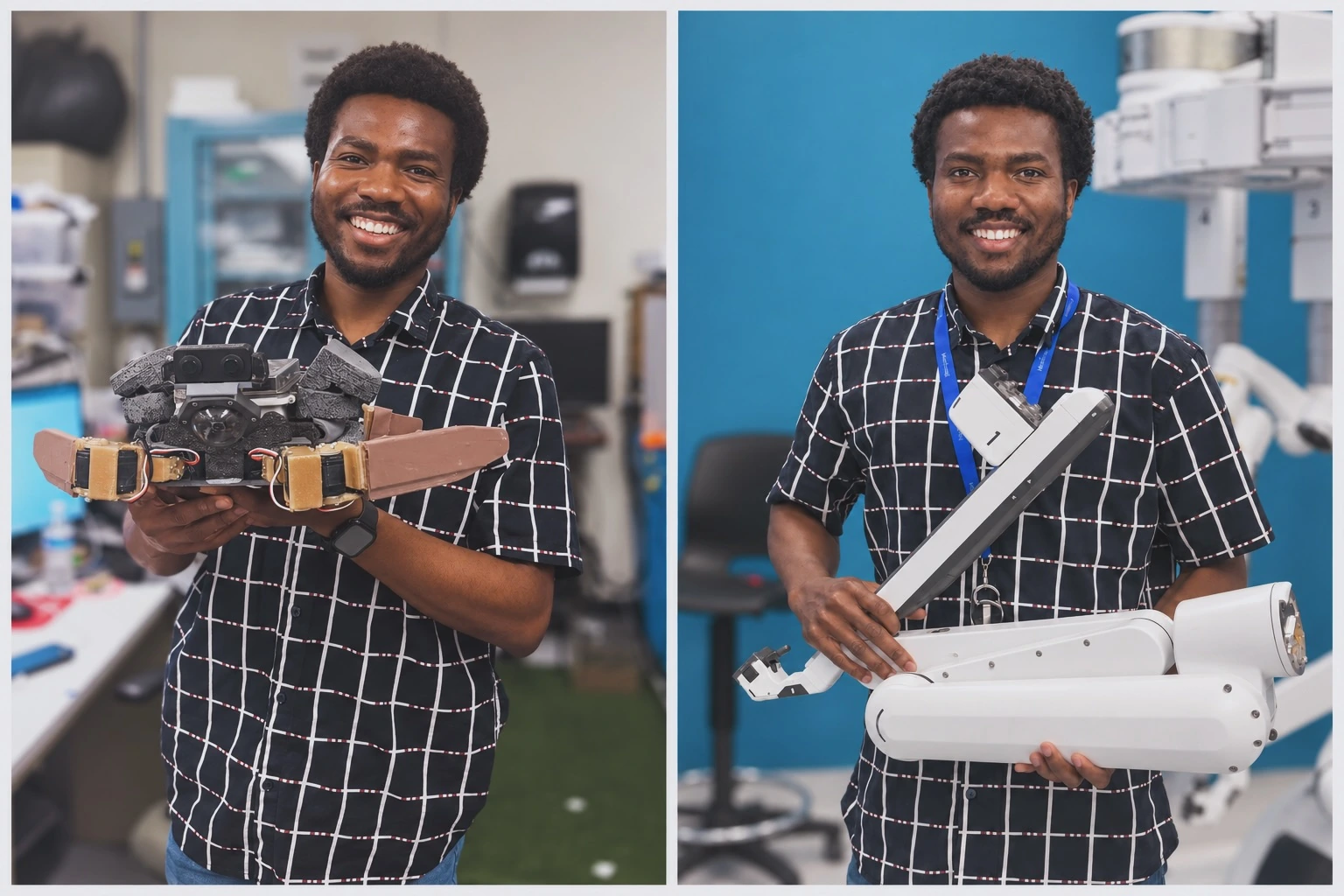
Nnamdi Chikere holding a bioinspired turtle robot and a robotic hardware assembly
From research to real-world roboticsControl · Embodiment · Experimentation
IntuitiveRobotics & controls · 2026
Notre DameDoctoral research · Since 2022
ICRA 2025Amphibious Robotics Workshop best poster

Industry

Medical robotics. Systems. Hardware. Control.

I am interested in medical robotics and systems, hardware, and control engineering roles. I bring experience in motion control, calibration, embedded sensing, electromechanical integration, and experimental validation.

Explore engineering experience →
Academia

Adaptive behaviors through embodied intelligence.

My research direction combines machine learning for terrain detection with central pattern generators (CPGs) and nonlinear controllers, connecting perception, body mechanics, and adaptive behavior.

Explore research & teaching →

01 / Experience

Engineering across research and industry.

May – August 2026

Intuitive

Systems Analysis Intern
Robotics & Controls · Sunnyvale, CA

Investigated motion-control performance in safety-critical robotic actuation systems, connecting system-level tests with electromechanical analysis.

  • Developed and evaluated motor-control calibration methods using repeatability studies and controlled experiments.
  • Performed root-cause analysis across controls, sensing, mechanics, and calibration software.
  • Built MATLAB analysis and test workflows to support component qualification and control-system robustness.
August 2022 – Present

MINIRO Lab, Notre Dame

Graduate Research Assistant
Advisor: Prof. Yasemin Ozkan-Aydın

Develop bioinspired robotic platforms and adaptive control strategies for locomotion on granular terrain and in aquatic environments.

  • Implement closed-loop control, CPG-based gait coordination, and optimization on physical robots.
  • Integrate embedded actuation, PCBs, IMUs, force sensors, and current sensing.
  • Model robot dynamics in MATLAB/Simulink and MuJoCo, then validate through hardware experiments.

02 / Research

How can robots adapt through body, sensing, and control?

My research centers on adaptive behaviors and embodied intelligence: how morphology, environmental interaction, and control work together to generate effective robot behavior. Building on my work in bioinspired locomotion and terrain-dependent CPG optimization, I aim to combine machine learning for terrain detection with CPGs and nonlinear controllers so robots can select and adapt their behaviors as conditions change.

01

Embodied intelligence

Investigating how morphology, compliance, and body–environment interactions shape locomotion and adaptive behaviors.

02

Terrain perception

Research direction: machine learning for terrain detection, using onboard sensing to inform gait selection and behavioral transitions.

03

Adaptive & nonlinear control

Building on Hopf CPGs and Bayesian gait optimization toward feedback-driven nonlinear controllers that adapt to changing conditions.

Selected robotic systems

A sample of my work across amphibious locomotion, compliant quadrupeds, microswimmers, and multi-robot systems.

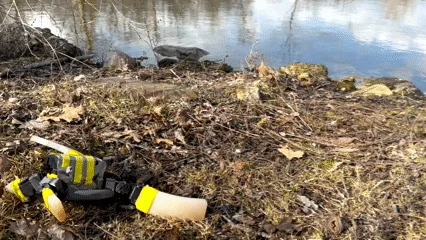
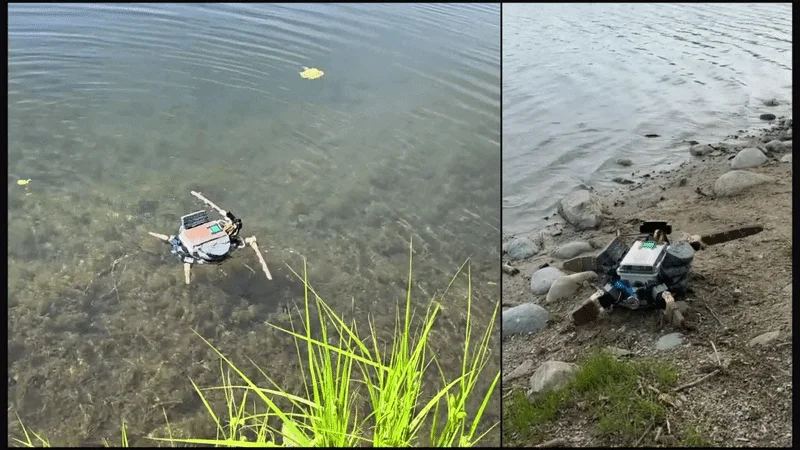
Sea turtle robot on rocks Terrain robotics

Sea Turtle–Inspired Robot: Morphology & Terrain Locomotion

Bioinspired robotic platform used to study how flipper morphology, body shape, and gait coordination influence locomotion across complex terrains such as sand, rocks, and coastal vegetation.

Flipper locomotion Embodied intelligence Terrain adaptation IMU + current sensing
Paper: Embodied Design for Enhanced Flipper-Based Locomotion →
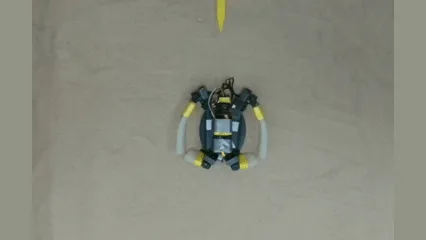
Quadruped with variable-stiffness tail Legged locomotion

Variable-Stiffness Tail for Quadruped Stability & Maneuverability

A cable-driven, multi-segment tail integrated into a sprawling quadruped to study how controlled tail stiffness improves stability, maneuverability, and terrain adaptability on rough outdoor surfaces.

Variable stiffness Compliant mechanics Legged locomotion Terrain adaptation
Paper: Effect of Tail Stiffness on Sprawling Quadruped Locomotion →
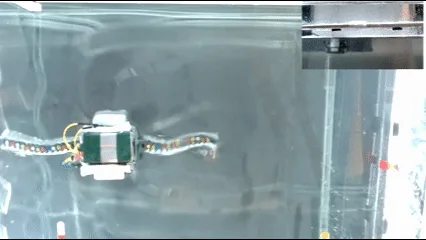
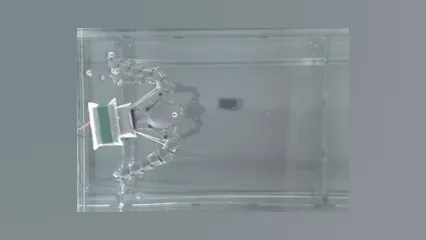
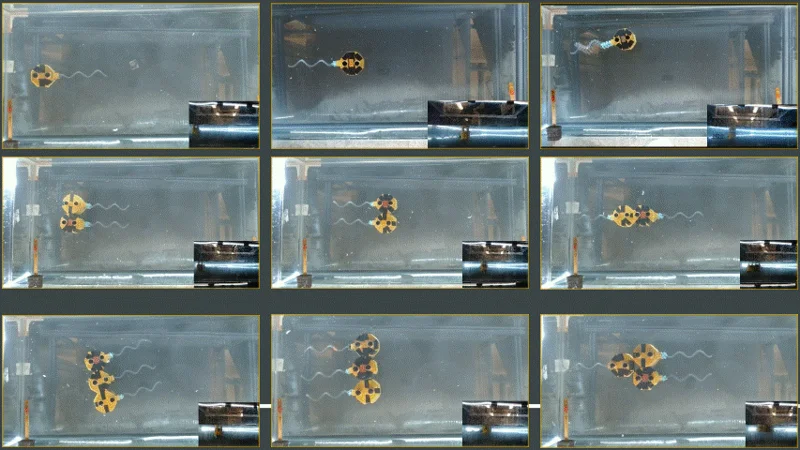
Zoospore-inspired dual-flagella robot Low-Reynolds locomotion

Zoospore-Inspired Robotic Swimmer with Dual Flagella

A bioinspired robotic platform modeled after Phytophthora zoospores to investigate high-speed swimming at low Reynolds numbers. The robot uses two flexible planar flagella and oscillatory actuation to emulate natural microorganism propulsion where viscous forces dominate.

Low-Re hydrodynamics Bioinspired locomotion Flagellar propulsion Experimental fluid mechanics
Paper: Flagellar Swimming at Low Reynolds Numbers →
Flagellated robot design Low-Reynolds locomotion

Quadriflagellated Zoospore-Inspired Swimmer

A cable-driven, algae-inspired swimmer designed for propulsion in low-Reynolds-number environments. The robot uses four flexible, multi-segment flagella actuated by a single DC motor to explore how stiffness modulation during the stroke cycle enhances speed in viscous media.

Low-Re hydrodynamics Soft actuation Bioinspired design Experimental fluid dynamics
Paper: Harnessing Flagella Dynamics for Enhanced Robot Locomotion →
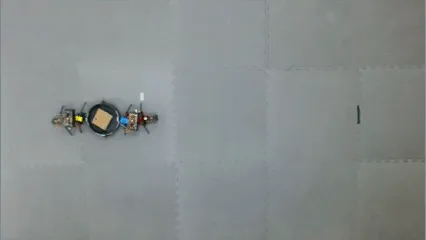
Collective transport robots Multi-robot systems

Collective Object Transport Robots

Group of small robots that coordinate to transport shared loads, inspired by ant collectives.

Multi-robot control Collective behavior Bioinspiration
Manuscript in preparation
CAD diagram of turtle robot Control & optimization

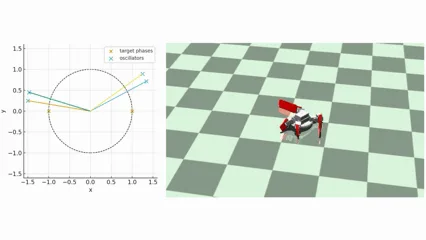
Hopf-CPG Control and Bayesian Optimization

Nonlinear oscillator networks tuned with Bayesian optimization to stabilize and speed up gait patterns.

MATLAB + Simulink MuJoCo Bayesian optimization
Related control-development work for the amphibious platform
Embedded ML dashboard camera project Embedded Vision

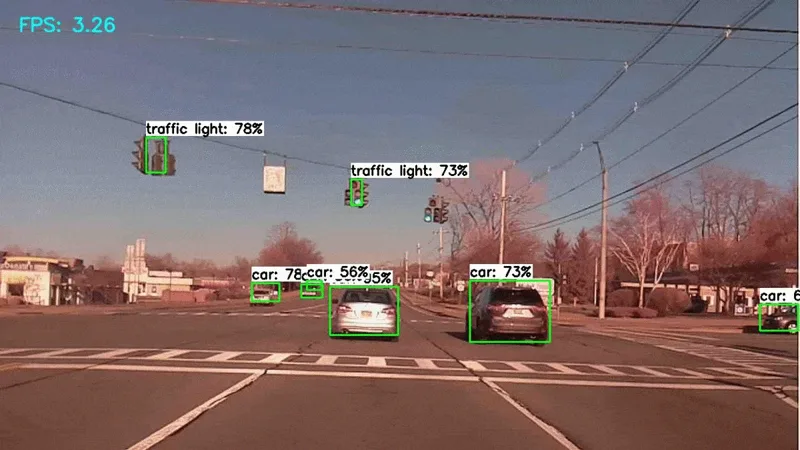
Machine Learning Dashboard Camera System

A real-time hazard-detection system built on Raspberry Pi using a quantized MobileNetV2 model with audio and LED warnings for safer driving.

MobileNetV2 COCO + BDD100K Raspberry Pi TensorFlow Lite Embedded ML
GitHub Repository →
Vision-based grasp detection Perception

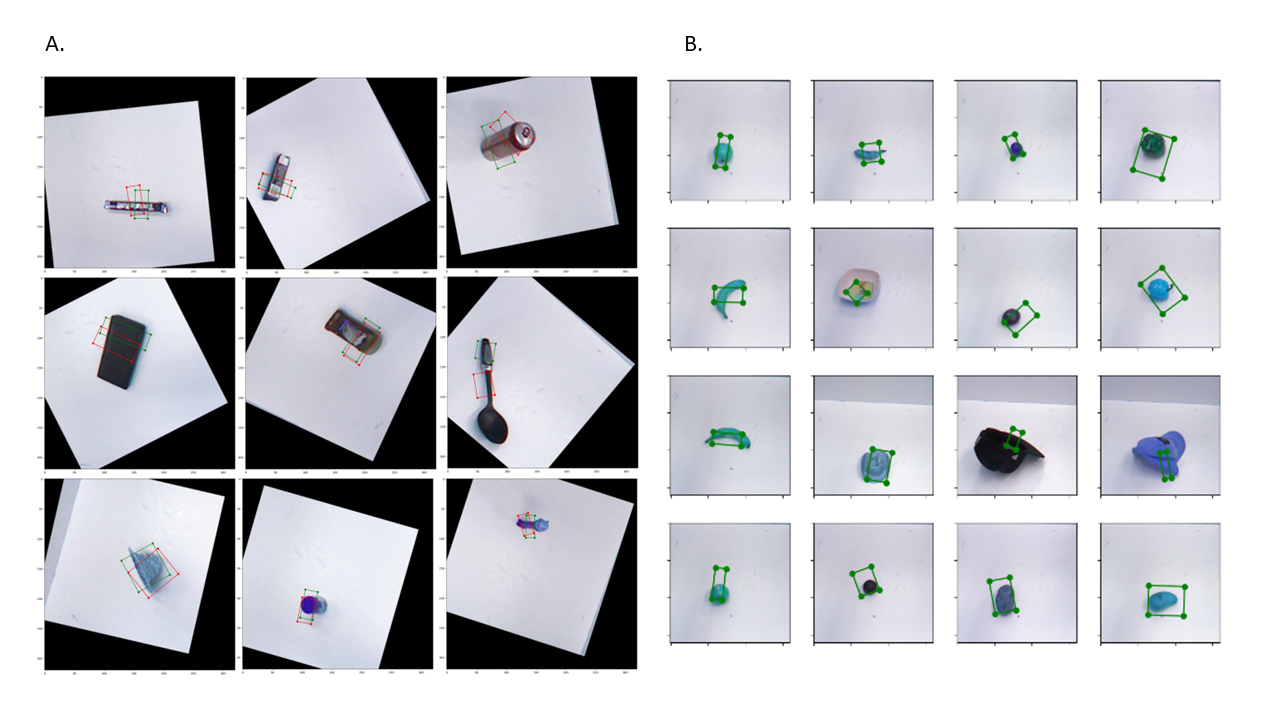
Deep Learning–Based Grasp Detection

CNN-based system for inferring grasp points on tabletop objects to support planar manipulation.

TensorFlow Object pose Grasp planning
Internal research project

Technical Skills

Tools I use most often when designing, building, and testing robots.

MATLAB / Simulink Python · NumPy MuJoCo ROS · Raspberry Pi KiCad (PCB design) SolidWorks · Fusion 360 Embedded C / microcontrollers Sensor fusion Optimization Reinforcement learning basics Experimental design & data analysis Test & Reliability

03 / Teaching & mentorship

Learning robotics by building robots.

University teaching

Experimental Robotics · Notre Dame · 2023, 2026
Graduate teaching assistant: bioinspired design, sensor integration, real-time control, and hardware troubleshooting.

Autonomous Mobile Robots · Notre Dame · 2023
Graduate teaching assistant: localization, path planning, SLAM, ROS simulations, and TurtleBot labs.

Control Theory · MOUAU · 2022
Tutorials on classical control, stability analysis, and PID tuning.

Mentorship & broader participation

Mentored undergraduate researchers on amphibious robots, robotic swimmers, multi-robot systems, and simulation.

Led hands-on robotics workshops through Expanding Your Horizons and taught Python through Notre Dame's TRiO Upward Bound program.

2026 ASEE paper on project-based robotics learning ↗

Selected Publications

Selected peer-reviewed work. See the academic CV for the complete publication list and work under review.

  • Hands-on experimental robotics: enhancing undergraduate engagement and research through iterative project-based learning, ASEE Annual Conference & Exposition, 2026. Paper ↗
  • What supports graduate student success in engineering fields? A scoping review of influences and challenges, ASEE Annual Conference & Exposition, 2026. Paper ↗
  • Zoospore-Inspired Robotic Swimmers with Dual Flagella for High-Speed Locomotion, Bioinspiration & Biomimetics, 2025. Link
  • Robust Maneuverability in Flipper-Based Systems Across Complex Terrains, Bioinspiration & Biomimetics, 2025. Link
  • Swimming Dynamics of a Soft Flagellated Robot in Low Reynolds Number Environment, The 19th International Symposium on Experimental Robotics (ISER 2025), 2025. Link
  • Embodied Design for Enhanced Flipper-Based Locomotion, Scientific Reports, 2025. Link
  • Harnessing Flagella Dynamics for Enhanced Robot Locomotion at Low Reynolds Number, IEEE Robotics and Automation Letters, 2024. Link
  • The effect of tail stiffness on a sprawling quadruped locomotion, Frontiers in Robotics and AI, 2023. Link
  • Enhancing Amphibious Flipper-Based Locomotion Through Terrain-Dependent Bayesian Optimization of CPG Control
    Nnamdi C. Chikere and Yasemin Ozkan-Aydin. Submitted to Advanced Robotics Research, 2026. Submitted manuscript ↗

Video Highlights

Short demonstrations of my robotic systems in action.

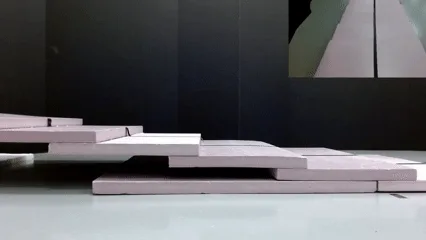
Quadruped Tail-Assisted Stabilization

Demonstration of how a flexible, cable-driven tail increases stability, protects against slips, and improves uphill climbing.

Sea Turtle–Inspired Robot

Terrain-adaptive flipper locomotion across sandy, rocky, and mixed coastal substrates.

Flipper-Based Turning Maneuvers

Turning gait configurations and flipper combinations that increase maneuverability on complex terrains.

Quadriflagellated Algae-Inspired Swimmer

Cable-driven, variable-stiffness flagella producing high-speed propulsion in a low Reynolds number regime.

Soft flagellated swimmer videoWatch on YouTube ↗ Soft flagella in Low-Re

Soft Flagellated Robot for Low-Re Swimming

A soft robotic swimmer using a single, flexible planar flagellum to study propulsion strategies where viscous forces dominate.

Contact

I welcome conversations about medical robotics, systems, hardware, and control engineering roles, as well as postdoctoral and faculty opportunities in adaptive behaviors, embodied intelligence, and robotics. My Ph.D. completion is expected in January 2027.